Opinion
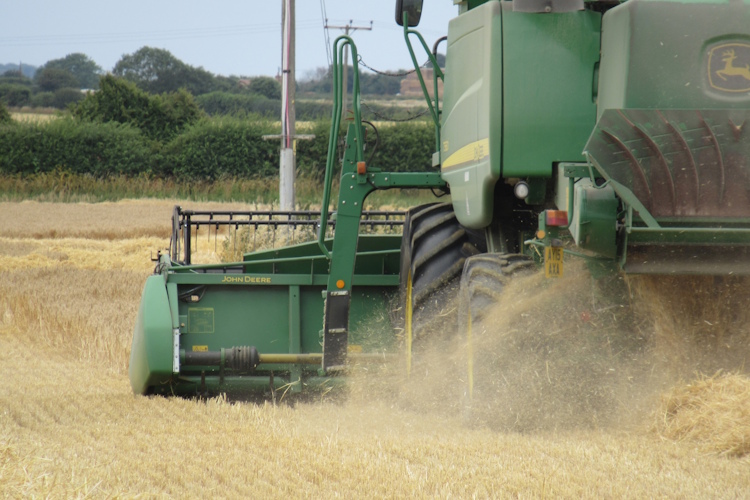
Give humble thanks for God’s harvest provision
Hazel Manley is looking forward to this year’s harvest thanksgiving, and reminds us that it is God’s gracious provision that makes it all possible.
I have to admit that for as long as I can remember, I've been puzzled by the way we celebrate harvest.
I didn't grow up in a rural area, and cannot claim any special knowledge of farming, but I do eat. Having food on my plate on a regular basis is something I grew up viewing with gratitude. In my house (as a child and now as an adult), we have always said “Grace” - a short prayer of thanks for the food.
Yet, in decades of church harvest festival attendance, I’ve heard more said about the distribution of food and its inequalities than about being grateful to God that once again he has provided the right temperatures and the delicate balance of sun and rain for crops to grow. I've even been in churches that stopped celebrating harvest altogether, “Because it wasn't relevant in an urban setting”. Although, as my rural friends say, “They eat don't ‘ey?”
Perhaps, we are so divorced from the production of our food that most of us no longer have the faintest idea what grows where and how. Moving to the countryside, I gained a retired farm manager as a friend, and despite some amusement at my ignorance, he has patiently answered questions about what was growing in the surrounding fields and the processes involved in growing the humble spud; it's been an eye-opener.
Maybe another factor is the global economy. We don't have enough wheat? Then we'll import it. Yes, there may be a rise in supermarket prices, but our plates will remain full. The cost seen in hungry children elsewhere in the globe, because food prices have risen beyond their means, largely goes unnoticed here. As for the UK farmers pushed into bankruptcy - if they're lucky, they might just get a mention halfway down page 7 of a national newspaper.
This year, field fires and hosepipe bans have been all over the news. Locally, although we've not had fires so far, the effects of the drought in the fields around us have been dire.
To give just a few examples: wheat yields may be down from about 10 tonnes per hectare to 7.5, and sugar beet, once a local staple, may be down by 50% per hectare, and these have knock-on effects on local hauliers. Local shepherds are now wondering how they will find enough feed for their animals over winter. Some farmers will be wondering just how big their losses will be.
Whilst, 2 to 3 years ago, our local farmers had swans swimming where there should have been crops, this year the ground is too hard to work. I doubt they think the conditions for a good harvest next year can be assumed.
So, isn't it about time that we Christians reminded ourselves that our harvests are utterly dependent on God's gracious, undeserved provision of the conditions which make the hard work bear fruit? Isn't it time for us to celebrate the harvest first and foremost by giving heartfelt thanks to him for it but, also, by humbly asking God for his provision of the next harvest rather than taking this for granted?
Food inequality, climate change, land use, agricultural practices etc are all important issues and cannot be ignored, but we shouldn't allow them to let us forget that unless God gives us the conditions for growth, there will be nothing to distribute, no matter what we do.
So, what should we do?
- This harvest-time, perhaps some humility would be appropriate. Too often, we have failed to recognise God's role; we have arrogantly assumed we will have a harvest. Time to repent and change our attitudes.
- Praise God for what we do have. Our harvest may be poor, but there is a harvest.
- Pray for those involved in food production. That they will have the skills, strength and wisdom they need, and for their financial situations.
- Ask for God to provide the conditions for growth over the next 12 months.
As Matthias Claudius’s Harvest hymn of 1782 says:
“We plough the fields and scatter the good seed on the land, but it is fed and watered by God’s almighty hand… No gifts we have to offer for all thy love imparts, but that which thou desirest, our humble, thankful hearts”
The photo is courtesy of Hazel Manley.
The views carried here are those of the author, not of Network Norwich and Norfolk, and are intended to stimulate constructive debate between website users.
We welcome your thoughts and comments, posted below, upon the ideas expressed here.
Click here to read our forum and comment posting guidelines